
Spanish-Language US Immigration Forms: A Complete Filling Guide
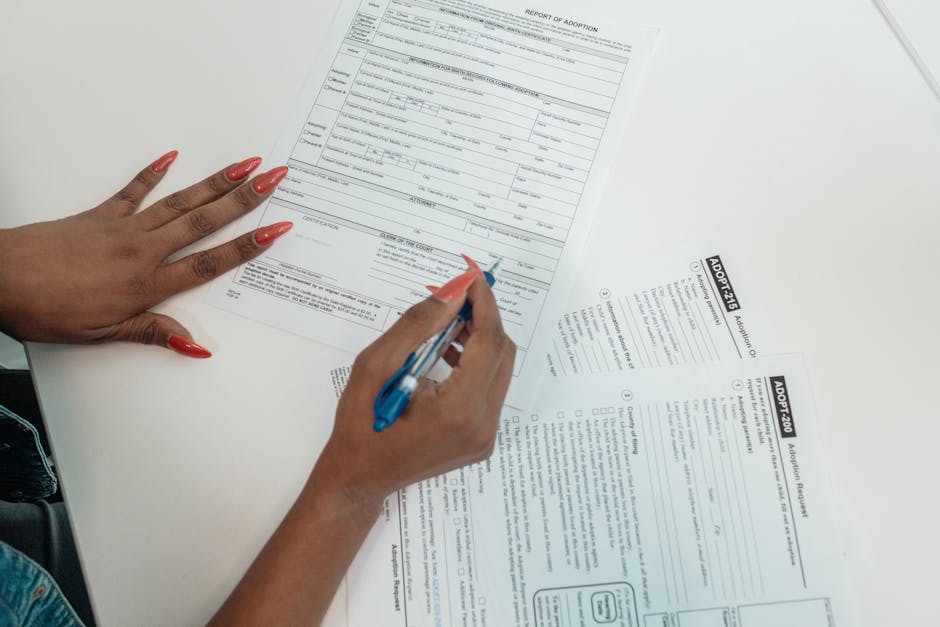
If you are filing USCIS, IRS, or consular forms and Spanish is your stronger language, you have probably noticed the gap between what is promised and what is delivered. USCIS publishes plenty of Spanish content on its website. Almost none of the actual forms are in Spanish.
This guide explains the difference. Which forms have official Spanish translations (very few), which have Spanish instructions wrapped around an English form (many), and how to fill them right so your application is not rejected for a procedural mistake.
The honest baseline: USCIS forms are English
Every USCIS form you file — I-130, I-485, N-400, I-765, I-589, I-90 — must be completed in English. The PDF itself is in English. Your answers have to be in English. The only piece of the form that can be in another language or script is your signature.
What USCIS does publish in Spanish is guidance. Study guides for the naturalization test. Instruction booklets that walk through what each question means. FAQ pages on uscis.gov/es. These help you understand the form before you fill it. They do not replace the form.
The flagship Spanish-language resource is M-588, Guía para Naturalizarse en Estados Unidos. It is a full Spanish-language companion to the N-400 process. Read it cover to cover before you touch the form. Then fill the N-400 in English.
Forms with official Spanish versions
The list is short. As of this writing, the USCIS forms with a true Spanish-language PDF you can file are:
- I-589 instructions (asylum) are available in Spanish as a reference, though the form itself stays English.
- G-1145 (e-Notification of Application/Petition Acceptance) has a Spanish version you can submit.
- Some state-level USCIS partner forms (food stamps, Medicaid eligibility checks) are bilingual.
That is essentially it for filing forms. For everything that decides your immigration status, you file in English.
DS-160 and the consular packet
The DS-160 (nonimmigrant visa application) lives on the State Department's CEAC system. The interface has a language toggle that displays each question in Spanish, French, Arabic, and a handful of other languages as a tooltip. Useful for understanding. Your actual answers still have to be in English, in Latin characters, with no accents.
This trips people up. Adriana Núñez on your passport becomes Adriana Nunez on the DS-160. The system rejects ñ, á, é, í, ó, ú. Do not try to work around it. The mismatch is expected, and the visa officer is trained to see "Nunez on DS-160" and "Núñez on passport" as the same person.
The DS-260 (immigrant visa application) works the same way. Spanish tooltips, English answers, no special characters.
IRS forms for immigrants: W-7 and the ITIN
If you are an immigrant filing US taxes without a Social Security Number, you need an Individual Taxpayer Identification Number (ITIN). The application is Form W-7.
The W-7 is English only. The companion IRS publication, Publicación 1915SP (Comprenda su Número de Identificación Personal del Contribuyente del IRS), is in Spanish and explains who qualifies, what documents are accepted, and how to file.
Fill the W-7 in English. Attach either your passport (simplest) or a combination of two other identity documents from the IRS-approved list. Mail it to the IRS ITIN unit in Austin, or file in person at an IRS Taxpayer Assistance Center or a Certified Acceptance Agent. Processing currently runs about 7 weeks.
What to do with Spanish-language supporting documents
This is where most applications stumble. Your birth certificate is in Spanish. Your marriage record is in Spanish. Your high school diploma is in Spanish. USCIS will not read them.
The rule: every supporting document not originally in English needs a full English translation plus a certification from the translator. The certification has to state, in writing, that the translator is competent in both languages and that the translation is accurate and complete.
The translator does not have to be government-certified in most cases. A bilingual friend, a family member, or any literate Spanish-English speaker can do it, as long as they sign the certification. The exact wording is on the USCIS website under "Documents in a Foreign Language." Paralegals usually have a template.
For high-stakes filings (asylum, removal defense, court submissions), use a certified translator from a service like ATA-certified providers. The extra cost buys you authority in front of an immigration judge.
Filling the form: a practical workflow
If your Spanish is stronger than your English, the working pattern is:
- Read the Spanish-language guidance (M-588, M-477, Publicación 1915SP, or the equivalent for your form).
- Draft your answers in Spanish first on paper or in a profile, so you know what you are saying.
- Translate each answer to clear English before typing it on the form. Short, simple English is fine. USCIS officers prefer clear English over fancy English with mistakes.
- Have a bilingual second reader check the form before you submit. One missed apostrophe in your name is enough to trigger a Request for Evidence.
The same workflow applies whether you are filing N-400 for naturalization, I-130 for a family petition, or I-485 for adjustment of status. The forms are different. The English-only rule is the same.
Where FillWizard fits
If you are filing multiple USCIS forms for the same person or family, the data is mostly the same across forms. Name, address, employment, family members, travel history. FillWizard lets you store that data once in Spanish, then output the answers in English on each form. The translation happens in the background. For more on the multi-form pattern, see one profile, every PDF and the immigration form filling software guide.
What to try this week
Pick the one USCIS form you are working on right now. Find the matching Spanish-language guidance on uscis.gov/es. Read it before you touch the form. Then fill the form in English with a bilingual second reader. Your rejection rate drops to near zero, and you stop guessing at what each question is really asking.
Checklist
- Check uscis.gov/es for the Spanish guidance booklet that matches your form (M-588 for naturalization, M-477 for green-card document checklists).
- Answer every question on the actual form in English, even if the instructions you used were Spanish.
- For supporting documents in Spanish (birth certificates, marriage records), attach a certified English translation signed by the translator.
- Use IRS Form W-7 in English for an ITIN, but read the Spanish-language Publication 1915SP first to understand the eligibility rules.
- DS-160 must be answered in English in Latin characters, even for names with accents or tildes. Adriana goes in as Adriana, not Adríana.
Related articles
 Tool Comparisons
Adobe Fill & Sign Alternative When Autofill Suggests the Wrong Name
Adobe Fill & Sign remembers more than you want. Wrong name. Previous customer's signature. Private medical details on the next PDF. This guide covers when to clear the cache, when to keep Acrobat, and when a reusable profile is the safer Adobe Fill & Sign alternative.
8 min readRead more Productivity
How to Batch Fill PDF Forms from a Profile (Without Mail-Merge Pain)
Batch fill and prefill should mean enter once, fill many PDFs. Mail merge for fillable forms is the old workaround. A profile is the cleaner version of the same idea.
9 min readRead more Visa Workflows
DS-160 Family Application: Why the Family Button Still Makes You Retype Everything
A DS-160 family application is still one form per person. The family button on CEAC does almost nothing for shared fields. Profiles fix the retyping. CEAC still gets the final submit.
9 min readRead more